
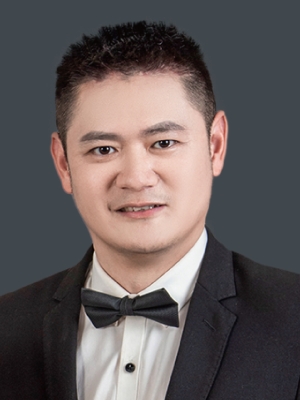
教育背景
2004.09-2008.06,南京大學,物理學院,理學學士學位。
2008.08-2014.12,美國佛羅里達大學,物理系,理學博士學位。
工作履歷
2015.01-2017.06,美國佛羅里達大學物理系和量子理論中心,博士后。
2017.07-2020.07,美國加州大學圣地亞哥分校納米工程系, 博士后。
2020.08-2021.07,美國威斯康星大學麥迪遜分校材料科學工程,助理科學家。
2021.08-至今,威廉希爾WilliamHill官方網站料學院,副教授,碩士生導師。
學術兼職
npj Computational Materials 客座編輯; Physical Review Letter,npj Computational Materials,Journal of Materials Chemistry C, Physical Review B, Physical Review Materials, Physical Review Research等SCI期刊評審專家;
主講課程
本科生:AI輔助材料設計;大學物理
研究生:材料設計與計算材料學
科研工作
【學術表現】
長期基于對尺度模擬結合人工智能對新材料、材料物性及其內在性能機理展開系 統研究,至今取得了一系列國際領先的原創性研究成果。在低維材料物性方面,系統研究了一系列單分子磁體的磁性機制,發現了一種新的基于f軌道的磁直接相互作用。此外在方法上發展了一種新的基于多重散射理論的電子傳輸方法,并用之系統研究了基于石墨烯的新型場效應管的電子傳輸問題;在人工智能輔助設計材料方面,通過高通量計算建立了基于第一性原理計算的目前最大最廣的金屬晶界能數據庫,并在著名數據庫中心Materials Project發布。同時也是從事機器學習勢函數這一新興領域最早的學者之一,為機器學習勢場推廣到多元合金體系作出了重要的貢獻。此外發展了一種基于原子結構圖形化的預測材料禁帶寬度的深度學習模型。此部分的研究得到了領域同行的廣泛關注,多次受邀參加高水平國際會 議做邀請報告。至今發表學術論文60余篇,其中以第一/通訊作者身份在Nat. Commun.、Nano Lett.、npj Comput. Mater. 、Acta Mater.、Phys. Rev. B等高水平期刊發表研究論文18篇,累計引用3400余次。受邀擔任 Nature 旗下計算 材料頂刊 npj Comput. Mater.客座編輯,已評審或仲裁物理頂刊 Phys. Rev. Lett.論文 15 篇以及其他材料和物理期刊Adv. Funct. Mater., npj Comput. Mater.等總計 60 余篇。回國以后一直擔任深圳市科創委通訊評審專家。
歡迎對結合人工智能和多尺度模擬研究材料性質有興趣的學生聯系報考研究生(未來走學術道路或是進工業界均可)。
研究領域
(1)多尺度模擬結合人工智能設計低維磁性材料
(2)基于機器學習勢函數分子動力學模擬的高熵合金設計
(3)低維材料電子結構、磁性等性能的第一性原理計
研究方法
1)第一性原理 2)分子動力學 3)機器學習 4)高通量計算 5)量子輸運
計算機語言
1)Python 2)Fortran 3)Bash
【主要文章】
1. Wang T, Li J, Wang M, Li Cheng, Su Y, Xu S, Xiang-Guo Li* (李相國), Unraveling dislocation-based strengthening in refractory multi-principal element alloys, npj Computational Materials, 2024, 10(1), 143.
2. Wang M, Li C, Xiang-Guo Li*, Hou Yanglong “Direct observation of strong t2g-eg orbital hybridization and effects of orbitals in a molecular analogue of chromium perovskite”, Physical Review B, 2024, 110, L020409.
3. Huang X, Li C, Yuan M, Shuai J, Xiang-Guo Li*, Hou Yanglong, “Unphysical grain size dependence of lattice thermal conductivity in Mg3 (Sb, Bi)2: An atomistic view of concentration dependent segregation effects ”, Materials Today Physics, 2024, 43, 101386.
4. Wang M, Wang T, Yuan M, Zhang Q, Liu S, Shuai J, Xiang-Guo Li*, “Molecular analog of perovskite ferrites: First-principles studies of electronic and magnetic
properties”, Physial Review B, 2023, 108(18): 184421.
5. Ouyang P, Yuan M, Tang P, Zhang Q, Liu S, Shuai J, Xiang-Guo Li*, “Atomic Local Ordering and Alloying Effects on the Mg3(Sb1–xBix)2 Thermoelectric Material”, ACS Applied Materials & Interfaces, 2023, 15: 37554.
6. Xiang-Guo Li*, Xu S, Zhang Q, Liu S, Shuai J, “Complex strengthening mechanisms in nanocrystalline Ni-Mo alloys revealed by a machine-learning interatomic potential”, Journal of Alloys and Compounds, 2023, 952, 169964.
7. Xiang-Guo Li, Blaiszik B, Schwarting M E, Jacobs R, Scourtas A, Schmidt KJ, Voyles PM, Morgan D. Graph network based deep learning of bandgaps. The Journal of Chemical Physics, 2021, 155(15), 154702
8. Xiang-Guo Li, Chi Chen, Hui Zheng and Shyue Ping Ong, “Complex Strengthening Mechanisms in the NbMoTaW Multi-Principal Element Alloy”, Npj Computational Materials 6, 1, 2020.
9. Hui Zheng#, Xiang-Guo Li#, Richard Tran, Chi Chen, Matthew Horton, Donny Winston, Kristin A. Persson and Shyue Ping Ong, “Grain Boundary Properties of Elemental Metals”, Acta Materialia 186, 40, 2020.
10. Annaliese. Thuijs#, Xiang-Guo Li#, Yun-Peng Wang, Khalil A. Abboud, X. -G Zhang, G. Christou and Hai-Ping Cheng, “Molecular Analogue of the Perovskite Repeating Unit and Evidence for a Direct MnIII-CeIV-MnIII Exchange Coupling Pathway”, Nature Communication 8, 500, 2017.
11. Xiang-Guo Li, X. -G Zhang and Hai-Ping Cheng, “Conformational Electroresistance and Hysteresis in Nanoclusters”, Nano Lett, 14, 4476, 2014.
12. Xiang-Guo Li, Chongze Hu, Chi Chen, Zhi Deng and Shyue Ping Ong, “Quantum-Accurate Spectral Neighbor Analysis Potential Models for Ni-Mo Binary Alloys and FCC Metals”, Phys Rev. B 98, 094104, 2018.
13. Xiang-Guo Li, I. H. Chu, X. -G Zhang and Hai-Ping Cheng, “Electron transport in graphene/graphene side-contact junction by plane-wave multiple-scattering method”, Phys, Rev. B 91, 195442, 2015.
14. Xiang-Guo Li, James N. Fry and Hai-Ping Cheng, “Single-molecule magnet Mn12 on graphene”, Phys, Rev. B 90, 125447, 2014.
15. Xiang-Guo Li, Yun-Peng Wang, X. -G Zhang and Hai-Ping Cheng, “Tunneling field-effect junctions with WS2 barrier”, Journal of Physics and Chemistry of Solids 128, 343, 2019.
【科研課題】
- 廣東省自然科學基金面上項目,2025-2027
- 中山大學百人計劃啟動經費,2021-2024 (主持)
- 美國海軍辦公室研究基金-多主元素合金:探索、設計和理解 (科研骨干)
- 美國科學基金-探索多功能分子電子結構材料 (科研骨干)
【學術會議報告】
- 特邀報告:“Quantum-accurate force fields from machine learning of large materials data”, LAMMPS Workshop and Symposium, Albuquerque, NM, USA. ( Aug, 2019)
- 特邀報告:“Quantum-accurate force fields from machine learning of large materials data”, Machine Learning and Informatics for Chemistry and Materials Workshop, Telluride, CO, USA. (Oct, 2018)
- 邀請報告:“First-principles simulations of Graphene/Transition-metal-Dichalcogenides/Graphene Field-Effect Transistor”, Sanibel Symposium, St. Simons Island, GA, USA. (Feb, 2017)
- 邀請報告:“First-principles simulations of Graphene/WS2/Graphene Field-Effect Transistor”, APS March Meeting, Baltimore, MD, USA. (Mar, 2016)
- 邀請報告:“First-principles study of a single-molecule magnet Mn12 monolayer on the graphene surface”, APS March Meeting, Denver, CO, USA. (Mar, 2014)
- 邀請報告:“First-principles study of charge transfer doping and electronic transport in single-walled carbon nanotubes”, APS March Meeting, Boston, MA, USA. (Mar, 2012)
- 邀請報告:“Electronic properties of Si-C interfaces”, APS March Meeting, Dallas, TX, USA. (Mar, 2011)
獎勵與榮譽
- 廣東省重大人才工程青年拔尖人才(2024)
- 深圳市“鵬城孔雀”高層次人才 (2022)
- 美國佛羅里達大學CCMS獎學金(2009)
- 南京大學國家獎學金(2005)